Posts

Showing posts with the label Irish nationalism

The significance of the tri-color in Irish culture
Image
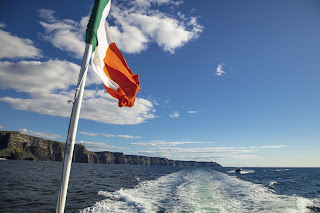
       One of the most recognizable representations of Ireland is the tricolor, popularly known as the Irish flag. The flag, which is made up of three equally spaced vertical bars of green, white, and orange, is very important to Irish history and culture.      Together and independently      Thomas Francis Meagher created the tri-color in 1848. The flag was meant to stand for Irish nationalism and serve as a symbol of harmony between the Catholic and Protestant communities in Ireland. The white stripe reflects the desire for peace and togetherness between the two groups, while the orange and green stripes stand for the Protestant and Irish nationalist traditions respectively.      First flown in Ireland during the Young Irelander Revolt of 1848, the flag swiftly came to represent Irish resistance to British tyranny. Also used during the Easter Rising of 1916, the flag emerged as a potent representation of the fight for Ir...
The history of the Irish flag

Image
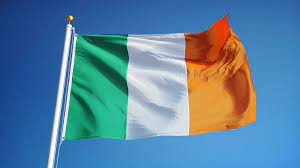
       One of the most recognizable representations of Ireland is the tricolor, popularly known as the Irish flag. The flag has a long and complicated history that is entwined with the history of Ireland. It is composed of three equal vertical bars of green, white, and orange.      Irish Flag's earliest forms      A group of Irish nationalists set out to design the Irish flag in 1848 with the intention of giving the Irish people a visual representation of their unity and freedom. The French tricolor, which had been embraced as a symbol of liberty, equality, and brotherhood during the French Revolution, served as the model for the flag.      The Interpretation of Colors      The Irish flag's colors each have a distinct meaning. The Irish Protestant tradition is represented by the orange stripe, whereas the Irish Catholic nationalist tradition is symbolized by the green stripe. The white sash represents the de...

The role of Saint Patrick's Day in Irish history

Image
  Both a religious event and a representation of Irish identity and culture, Saint Patrick's Day has been significant in Irish history. The occasion celebrates Saint Patrick, the nation of Ireland's patron saint, who is credited with bringing Christianity to the island in the fifth century. Initially, only the Catholic Church in Ireland observed Saint Patrick's Day as a religious festival. Yet as time went on, it developed into a significant cultural event that was embraced by people from all walks of life. Saint Patrick's Day evolved into a representation of Irish identity and resistance during the time of British control in Ireland. The holiday was utilized by Irish nationalists to support the Irish independence movement and promote Irish culture. The Irish Republican Brotherhood, a nationalist group that pushed for Irish independence, hosted the first Saint Patrick's Day parade in Dublin in 1903, for instance. Saint Patrick's Day remained a representation of ...

Irish poetry and literature

Image
       Irish poetry and literature have a long history that dates back to the early Celtic eras, and they have developed a unique style and shape over time. Early Irish literature was primarily composed in Gaelic and frequently dealt with mythology, heroism, and paranormal subjects.      With the rise of authors like W.B. Yeats, James Joyce, and Samuel Beckett in the 20th century, Irish poetry and literature attained widespread international acclaim. With his work frequently examining Irish nationalism, mysticism, and the complexity of human existence, Yeats in particular is regarded as one of the most important poets of the 20th century.      Seamus Heaney, who received the 1995 Nobel Prize in Literature, as well as contemporary writers Colm Toibin, Eavan Boland, and Anne Enright are among the other renowned Irish writers. Together with deeper human experiences like love, loss, and mortality, these authors have continued to examine topi...