Posts

Showing posts with the label Irish immigration

The Irish immigration experience
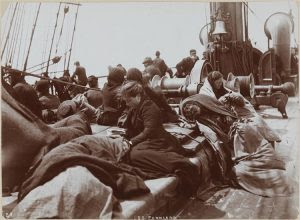
Image
       The history of Irish immigration is one that spans several centuries and is intricate and diverse. The United States, Canada, Australia, and New Zealand, as well as other regions of Europe and Latin America, have all welcomed immigrants from Ireland. Many causes, including as poverty, political and religious oppression, and the desire for a better life, have influenced this immigrant experience.      At the middle of the 19th century, when Ireland was experiencing severe poverty and famine, immigration from Ireland to the United States started. The potato blight, which started in 1845, resulted in severe disease and malnutrition as well as the emigration of many Irish people in quest of a better life. It is estimated that more than 100 people died between 1845 and 1855.      Irish immigrants were common in towns like Boston, New York, and Philadelphia, where they found employment in mines, factories, and railroads. They endured pr...

The influence of Irish immigration on Saint Patrick's Day

Image
       The holiday known as Saint Patrick's Day, which is observed on March 17, honors Irish culture and tradition. With celebrations, parades, and festivals held in places all over the world, it has evolved into a worldwide holiday. Although the celebration's origins are in Ireland, Irish immigrants are responsible for spreading the holiday's customs to other nations, where they now have a distinct existence of their own.      Beginning in the middle of the 19th century, when Ireland was going through a period of political and economic upheaval, was the immigration of Irish people to the United States. In search of a better life, many Irish immigrants immigrated to the United States, bringing with them their traditions and customs, such as Saint Patrick's Day.      Irish soldiers serving in the British army arranged the first St. Patrick's Day parade in America, which took place in New York City in 1762. The holiday did not, however, be...